What is the Verse Engine and how does it work?
The orchestration layer that makes genuine multi-character AI conversation possible.
The problem with single-model AI
Standard AI chat tools are built around a single model producing a single response. That model is helpful, fast, and often impressively capable — but it has one perspective. Ask it to play devil's advocate and it will, politely. Ask it to argue both sides of a question and it will, evenhandedly. What you rarely get is genuine pushback — the kind that comes from a perspective that actually disagrees with yours, rather than one that's been instructed to seem like it does.
When platforms try to simulate multiple voices through one model, the result is surface-level variation. Different names, different tones — but the same underlying reasoning, the same internal state, the same tendency to smooth things over.
What the Verse Engine does differently
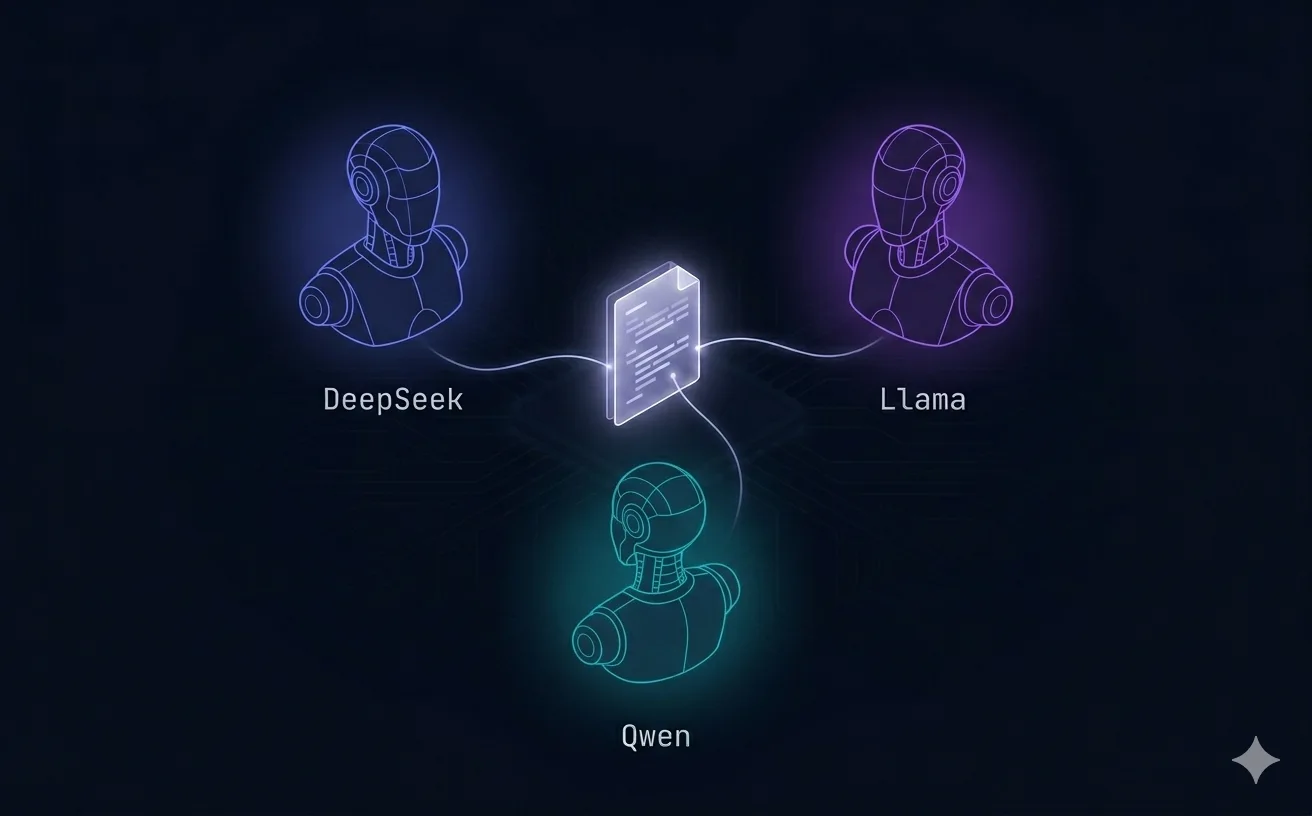
The Verse Engine doesn't simulate multiple voices. It coordinates multiple independent participants — each with their own memory, their own personality, and their own way of interpreting a conversation.
When Sherlock Holmes and Socrates are both active in a conversation, they don't share a response process. Sherlock doesn't know how Socrates is thinking about the problem. Each holds their own perspective on what's been said, and the engine coordinates how those independent contributions form a coherent exchange.
This is what makes genuine disagreement structurally possible. Not because the engine scripts a disagreement — but because two participants with genuinely different interpretive frames will, naturally, see things differently.
Three building blocks
The Verse Engine is built on three core concepts:
Field — the shared context every participant operates within. The topic, the setting, the conversation so far. Everyone's in the same room.
Consciousness — each participant's individual perspective within that Field. Their personality, their memory of what's been said, their way of reading it. Two participants, two Consciousnesses.
Utterance — a single contribution to the conversation. Every time a participant speaks, that's an Utterance. The engine maps these as a graph — tracking not just what was said, but who said it, what it was responding to, and what threads are still open.
How it decides who speaks next
In a fixed-rotation system, participants take turns regardless of relevance. The Verse Engine works differently. It reads the conversation graph and selects the next speaker based on who has the most contextually relevant perspective to contribute at that moment — a mechanism called resonance-based speaker selection.
The result is a conversation that has shape. Participants respond to the threads most relevant to their perspective. Some lead on certain points, step back on others. It develops the way a real discussion does.
The Verse Engine is AwakeVerse's orchestration system — it coordinates multiple independent AI participants in real time, rather than routing everything through one model that simulates different voices.
Not just conversation — structured output too
The Verse Engine also powers Workspace — AwakeVerse's collaborative task mode. Where Dialogue is about the exchange itself, Workspace is about what the exchange produces.
In a Workspace session, multiple AI models take on defined roles — analyst, challenger, synthesiser — and work through a task together before generating structured output. A business plan gets stress-tested by a sceptic before it's finalised. A research brief gets challenged by a contrarian before it ships. The same orchestration logic that drives genuine disagreement in Dialogue drives genuine multi-perspective review in Workspace.
The output formats reflect this: PDF reports, DOCX documents, XLSX models, PPTX decks — depending on what the task calls for. The conversation is a means to a deliverable, not the end in itself.
→ [Read the full technical overview of the Verse Engine]
→ How is AwakeVerse different from standard AI chat?
→ What can I do on AwakeVerse?